5 Warning Signs Your House Needs Exterior Painting (Before the Damage Gets Worse)
How to Tell If Your House Needs Exterior Painting — Before Small Problems Become Expensive Repairs
After 40 years of painting homes across Connecticut, I can tell you this with absolute certainty: the difference between a $4,000 paint job and a $15,000 repair bill is usually about 12 to 18 months of ignoring the warning signs. Homeowners who catch exterior paint failure early save an average of 60–70% compared to those who wait until wood rot, moisture damage, or structural issues set in.
Below are the five warning signs we see most often on Connecticut homes, what causes each one, and exactly what happens if you let them slide.
1. Chalking: White Powder Comes Off When You Touch the Siding
What It Looks Like
Run your hand firmly across your painted siding. If a fine, chalky white or tinted powder transfers onto your palm, that's called chalking — and it means your paint's binder resin has broken down. Light chalking is normal after 8–10 years. Heavy chalking is a clear sign of paint system failure.
Why It Happens in Connecticut
We get intense UV exposure during long summer days, followed by freeze-thaw cycles that can repeat 30 to 50 times between November and March. South- and west-facing walls tend to chalk first because they absorb the most direct sunlight.
What Happens If You Ignore It
Delaying repainting by just two years after heavy chalking appears can increase total project costs by 35–50% due to additional prep work — scraping, sanding, priming damaged wood, and sometimes replacing boards entirely.
2. Fading and Uneven Discoloration from UV Damage
What It Looks Like
One side of your house looks noticeably lighter or duller than the others. The color that was once a rich colonial blue now looks washed-out and grayish. Fading is more than a cosmetic issue — it indicates the paint's protective resins are depleted.
The Hidden Risk
Significant fading means the paint's ability to reflect UV radiation has diminished. This allows more heat and ultraviolet energy to reach the wood directly, increasing the surface temperature of your siding by up to 15°F on hot days. That thermal stress warps trim boards, loosens joints, and dries out caulking.
What to Do
- Compare the color on your most sun-exposed wall to a shaded section.
- When repainting, invest in premium-grade exterior paint with advanced UV-resistant pigments. The cost difference is roughly $10–15 per gallon, but the lifespan increase is 3–5 additional years.
3. Caulk Cracking or Pulling Away from Trim and Joints
What It Looks Like
Walk around your home and look where trim meets siding, around window and door frames, and at corner boards. If you see caulk lines that are cracked, split open, or pulling away, your home's weather envelope has been compromised.
Why This Is a Connecticut-Specific Problem
Our dramatic temperature swings are the primary culprit. Over the course of a typical Connecticut winter, exterior materials cycle through roughly 40–60 thermal expansion events. Budget-grade caulks simply can't maintain adhesion under that kind of stress.
What Happens If You Ignore It
Failed caulk joints are the number one entry point for water damage. Wood rot around a single window or door can cost $800–$2,500 to repair. Multiply that across a dozen windows and you're facing a five-figure restoration project.
4. Bare Wood or Primer Showing Through the Paint
What It Looks Like
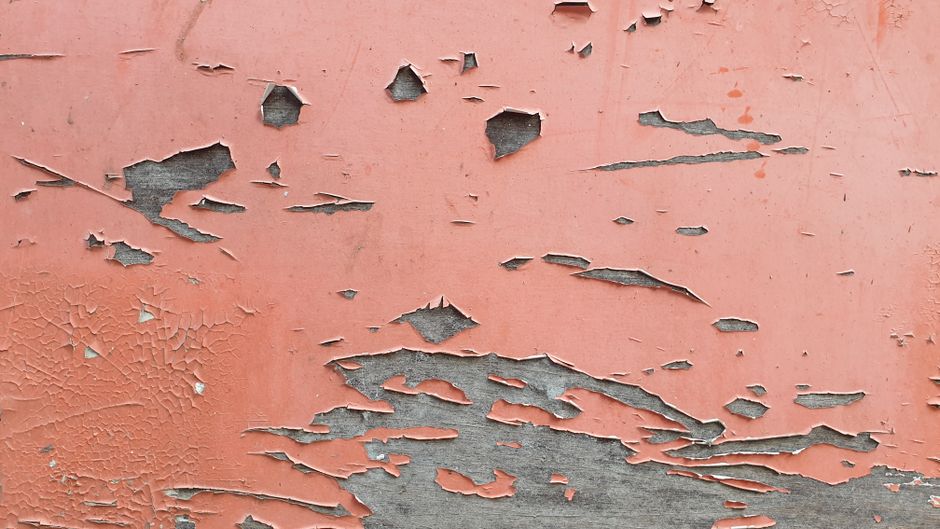
Patches where the topcoat has peeled, flaked, or worn away entirely, revealing either the gray-brown color of bare wood or old primer beneath. This is advanced paint system failure.
The Cost of Waiting
Repainting over sound, intact wood is a straightforward job. Replacing rotted clapboards, fascia boards, or trim adds $8–$20 per linear foot in material and labor. On a typical 2,000-square-foot Connecticut colonial, neglected bare-wood situations can add $3,000–$7,000 in carpentry repairs.
What to Do
- Probe any bare wood with an awl or screwdriver. If it sinks in easily, rot has already started.
- Small areas can be spot-primed and repainted if caught early enough.
- If bare wood is visible in multiple areas, schedule a full exterior evaluation immediately.
5. Mold and Mildew Stains That Keep Coming Back
What It Looks Like
Dark green, black, or gray splotches on your siding — particularly on north-facing walls, under eaves, and near landscaping. If they return within a few months after cleaning, you're dealing with a paint system problem, not just surface contamination.
Why Connecticut Homes Are Prone to This
Our humid summers create ideal conditions for mold and mildew growth. When paint becomes porous due to age, moisture gets trapped in the film and the wood beneath it. Connecticut's dense tree canopy makes the problem worse — reduced airflow keeps surfaces damp.
The Health and Structural Risk
Recurring mold isn't just ugly — it's actively digesting your paint film and the wood underneath. Mold can reduce the effective lifespan of an exterior paint job by 30–40%.
What to Do
- If mold returns within 3–6 months of cleaning, the paint has lost its integrity and needs to be replaced.
- Use a paint formulated with antimicrobial additives for mold-prone areas.
- Trim back vegetation at least 12 inches from siding and ensure gutters are directing water away from walls.
When Should You Repaint?
Before you see these signs get worse. In Connecticut's demanding climate, most quality exterior paint jobs last 7–10 years on wood siding and 10–15 years on properly prepared vinyl or fiber cement. If your home is showing even one of these five warning signs, you're already in the window where action today saves real money tomorrow.
Don't Wait for the Damage to Decide for You
We offer free, no-obligation exterior evaluations where we inspect your home's paint condition, identify problem areas, and give you an honest assessment of what needs to be done — and what can wait.
Schedule your free exterior evaluation today and let us help you protect your home before small warning signs turn into costly repairs.
Need Help With Your Project?
Our team has been improving homes across Connecticut since 1987. Get a free, no-obligation estimate.
Get a Free Estimate

